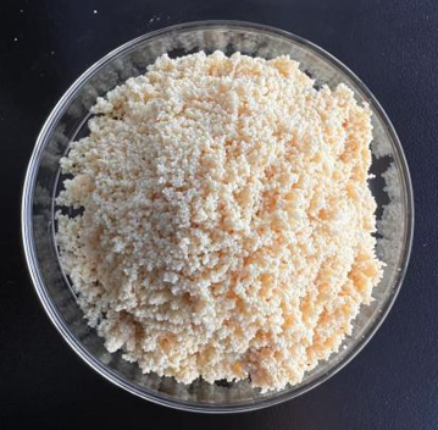
Food-Grade Ion Exchange Resins

With the continuous advancement of overall processing technology in the fruit and vegetable juice industry, along with customers’ differentiated requirements for product specifications, the quality and performance indicators of concentrated fruit and vegetable juices have become increasingly stringent and refined. Adsorption and separation technology undoubtedly offers unique advantages and has become an essential process step for quality control in fruit and vegetable juice processing. In the field of adsorption and separation technology for fruit and vegetable juices, backed by strong technical capabilities and extensive field application experience, our resin products for food separation and purification cover multiple categories including macroporous adsorption resins and ion exchange resins. The production of all related resins strictly complies with GB 24395-2009 “Adsorption Resins for Food Industry,” ensuring safety and reliability. These resins are widely applied in the refining and purification of food products such as concentrated fruit and vegetable juices, amino acids, starch sugar (alcohols), xylose (xylitol), organic acids, and oligosaccharides.
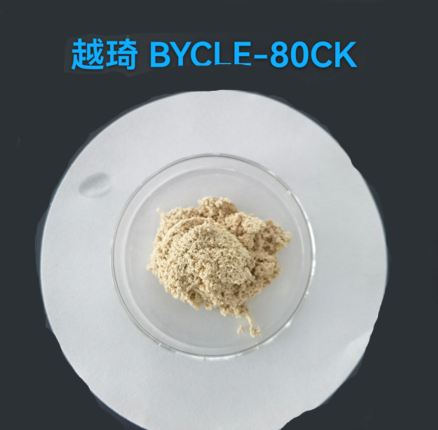
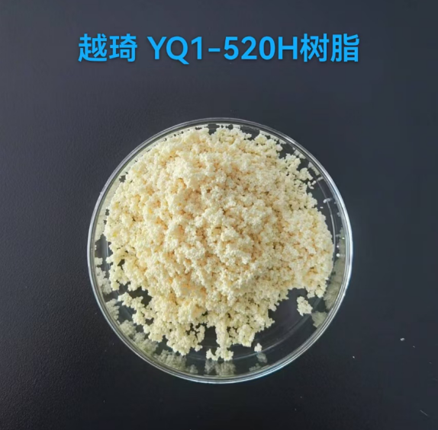
Description

Resin Synthesis

The synthesis of gel-type resins typically employs suspension polymerization as the core process. In this method, the main monomer (e.g., styrene) and the key crosslinking agent (e.g., divinylbenzene, DVB) are dissolved in an oil phase. Under the action of an initiator, the oil phase is dispersed into an aqueous phase containing a stabilizer to form uniform droplets. Subsequently, free radical polymerization proceeds under heating conditions: monomer molecules undergo chain propagation within the droplets, while DVB molecules connect adjacent polymer chains through their double bonds, forming a three-dimensional crosslinked network structure. Upon completion of the reaction, crosslinked polymer beads (commonly referred to as “white beads”) are obtained. This basic skeleton itself has no specific functionality and requires further chemical functionalization to introduce the desired active groups, ultimately yielding gel-type resins with ion exchange or other specific functions.

The synthesis of macroporous resins typically employs suspension polymerization as the core process. By adding a porogen to the mixed system of monomer (e.g., styrene) and crosslinking agent, an oil phase is formed and dispersed into an aqueous phase containing a dispersant. Under the action of an initiator, through gradient temperature-programmed polymerization, the monomers crosslink and solidify while the porogen is retained within the polymer network. After polymerization is complete, the porogen is removed by solvent extraction or washing, forming a polymer skeleton with a permanent three-dimensional pore structure (i.e., “white beads”). The pore size and specific surface area can be precisely controlled by the type of porogen (good solvent/poor solvent) and its proportion. Subsequent chemical functionalization is required to endow the resin with specific properties.

Properties

Macroporous Ion Exchange Resin Gel-type Ion Exchange Resin

Main Applications

Uniform-particle gel-type strong base anion exchange resin: desalination, decolorization, separation and purification.

Macroporous strong base anion exchange resin: decolorization and desalination of products such as starch sugar (alcohols), xylose (xylitol), and oligosaccharides.

Resin Physical and Chemical Indicators

Gel-type Food-Grade Resin

Test Item Specification
Moisture Content (%) 45–52
Total Weight Exchange Capacity (mmol/g) ≥ 10.8
Volume Exchange Capacity (mmol/ml) ≥ 4.2
Wet Bulk Density (g/ml) 0.72–0.80
Wet True Density (g/ml) 1.14–1.20
Sphericity After Attrition (%) ≥ 90
Uniformity Coefficient ≤ 1.6
Effective Particle Size (mm) 0.50
Conversion Swelling Rate (%) ≤ 70
Particle Size (%) (0.315–1.25) ≥ 95
Condition When soaked in water, the water is colorless and odorless


Macroporous Food-Grade Resin

Test Item Specification
Moisture Content (%) 45–52
Total Weight Exchange Capacity (mmol/g) ≥ 10.8
Volume Exchange Capacity (mmol/ml) ≥ 4.2
Wet Bulk Density (g/ml) 0.72–0.80
Wet True Density (g/ml) 1.14–1.20
Sphericity After Attrition (%) ≥ 90
Uniformity Coefficient ≤ 1.6
Effective Particle Size (mm) 0.50
Conversion Swelling Rate (%) ≤ 70
Particle Size (%) (0.315–1.25) ≥ 95
Condition When soaked in water, the water is colorless and odorless